Search This Blog

Showing posts with label tamarind. Show all posts

Thursday, 20 February 2014

Meeting the Spice Farmers

Wow, it has been over a year since we've posted a blog! This hiatus was not because we had nothing to write about but the total opposite..we were extremely busy building up the business and spreading the Spice Sanctuary spice love!

We started this year with 55 retail locations across Canada stocking our spices and a fabulous trip to go and meet the farmers who are growing our increasingly popular products! Apart from learning so much about how far organic farming has come along in India and of course seeing the spices in their sapling form to ready for harvest, the one thing we took away from our tours was just how much love, effort and skill these farmers dedicate to growing such beautiful spices. Their infectious smiles and warm hospitality was only a tiny glimpse into the love they pour into their farms and crops. No wonder we feel so much more connected to our products and more appreciative of their freshness and journey.

Meet Farmer Dehra AKA the King


He owns a small farm near a windfarm in southern Indian growing organic ginger. The ginger is then washed, sliced, sun dried and then powdered. Did you know that the ginger crop takes up so many nutrients from the soil that, once harvested, ginger cannot be grown in that same plot of land for a few years? This means Farmer Dehra has to be so versatile in what he grows on this plot in future years and hope that the yields will be good.

Meet Farmer Joy and his daughter

Farmer Joy has a 2 acre farm growing ginger and turmeric. Both of these spices are from the ginger family so grow in similar soil conditions. Turmeric takes about 9 months to grow and when the leaves are dry, the roots are ready to harvest. Shortly after, it is boiled for many hours before being sun dried (what the daughter is holding) and powdered.

Meet Farmer Shruthi, the Cardamom farmer
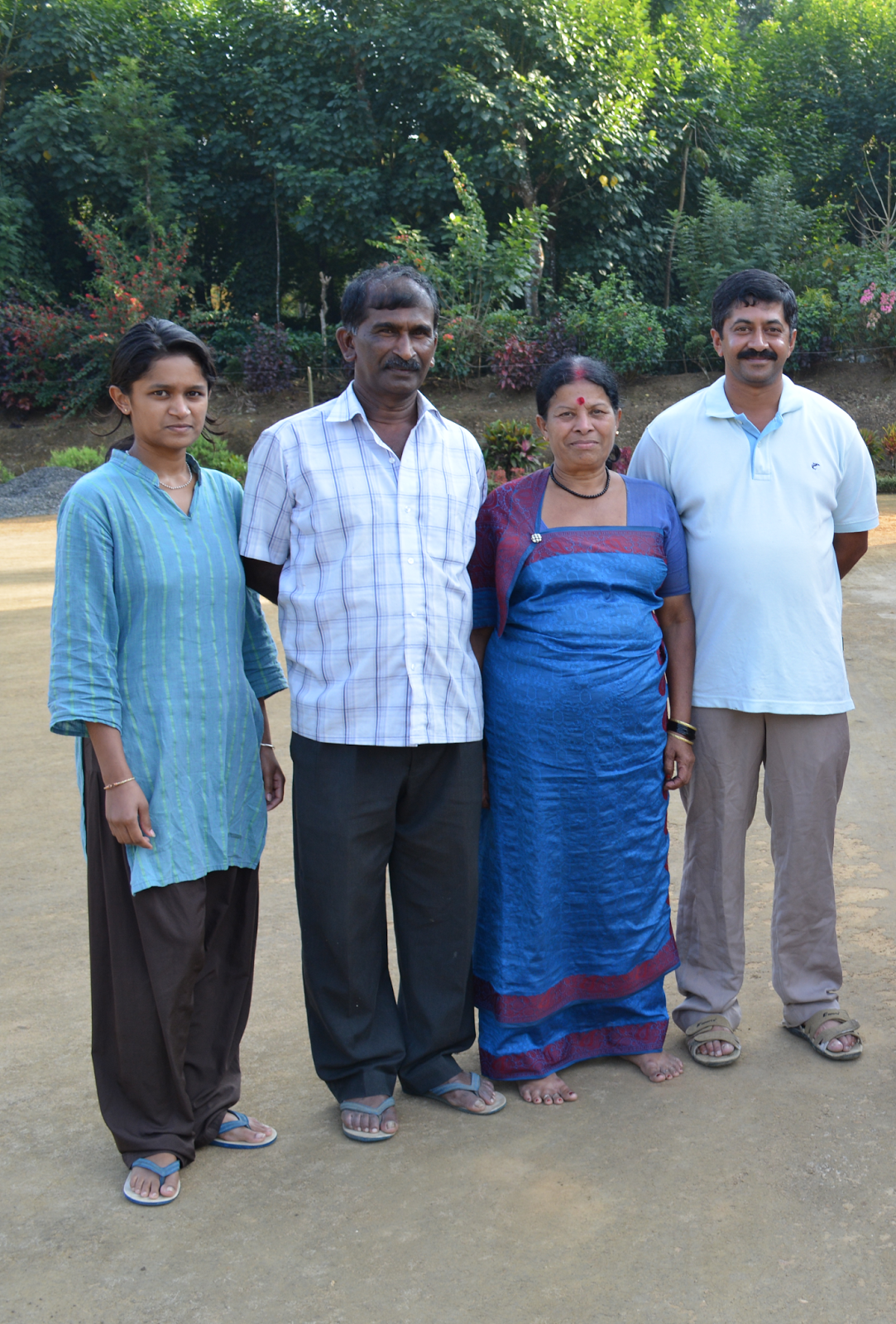
Farmer Shruthi's farms are in the Coorg region of India where the best Cardamom in the world is grown. Who knew that cardamom needed such skilled pickers for it to be the best quality - the difference between the inside of your cardamom pods being black seeds or gray or brown seeds is all down to the picker knowing which pods are ripe or not. The pods are then dried and graded by size and volatile oil content, bold grade being the best available.

Meet Farmer Ganesh

Farmer Ganesh owns a beautiful farm with his family and brother. They, like many farmers, utilise intercropping. This means they learn to grow different crops among different trees and soil conditions to optimise yields. Here we saw organic nutmeg, bananas, vanilla, turmeric, tamarind, lemongrass, dragonfruit and more!

We met so many other farmers and saw how organic composting and manure is made and even visited a biodynamic farm where the crops are grown using an astrological calendar and other prescribed methods and the crop yield has multiplied by 30%. There is only word to describe this experience. 
Amazing.


Saturday, 21 July 2012

Let's Chat about Chaat

As I prepare for our  Indian Street Food booth (with a healthy twist of course!) at the Canmore Folk Fest, it is only appropriate to about the most common form of street food in India - the Chaat!

Chaat (meaning "taste" or "lick") is the umbrella name given to savoury snacks and appetizers in Indian and Pakistani cuisine. Most Chaat dishes originated in my state of Gujarat or Uttar Pradesh but it is widely popular all over the Indian & Asian Sub-continent now. It usually comprises of something crunchy, a vegetable or bean layer, chutneys or sauces and of course special spice mixes! Many are eaten cold and some hot. In India, these are typically offered by food carts or specialist restaurants and in the West, in most Indian restaurants. Just as there is so much diversity within Indian food (other than Butter Chicken!), there is just as much in the different types of Chaats.

What I love about Chaat is that it encompasses a real balance in flavours . Take the Chaat I will be making for the Folk Fest: a Healthy Chickpea Chaat. The crunch will be kale (and hemp seeds), the bean: chickpea to be served in a tamarind sauce and also a coconut yoghurt chutney as an optional. The organic spice mix will include cayenne, cumin, mango powder (amchur), coriander, salt and other spices This is quite a tangy dish given the tamarind and yoghurt chutney but the spice mix is well balanced with the hot, pungent, tangy, sweet and mild. Refreshing, gluten free and so good for you!


Other examples of Chaat are:

PAPDI CHAAT
(small, fried, wheat flour disk piled with potato or chickpeas, tamarind sauce, mint sauce and yoghurt)


BHEL
(puffed rice to which onions, green chilies, herbs and various sauces are added)


and of course the more popular Samosas and Pakoras!

If you haven't tasted Chaat, add this to your bucket list for sure! If you have, what's your favourite?